More Than a Century of Shared Learning
The Greensboro Free Library’s history is a story of community effort, curiosity, and care.
1781
Greensboro Takes Shape
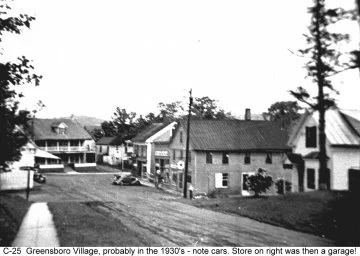
The town of Greensboro was chartered in 1781 and developed as a small but active rural community centered around Caspian Lake. From its earliest days, civic life in Greensboro included shared spaces for learning, discussion, and culture, laying the groundwork for what would eventually become the public library.
An Early Library Mention
A quit claim dated March 30, 1843 refers to an “old Greensboro town Library.” While no further documentation survives from this period, the reference suggests that townspeople were already organizing and sharing books decades before a formal library association existed.
1843
1873
Greensboro Library Association Organized
In June of 1873, a Greensboro Library Association was formally organized. A newspaper fragment from the time records that the library held 169 volumes, with additions being made regularly. The fragment praised the society’s commitment to providing “good reading” and noted that “no pains are being spared by the society to give the community good reading,” reflecting the seriousness with which books and learning were valued.
1870s–1880s
Fundraisers, Festivals, and Community Effort
The library grew through a steady stream of community support. Funds were raised through dramatic club benefits, concerts, and even a “necktie festival.” Treasurer’s records show careful accounting of book purchases, with classics by authors such as Dickens, Scott, Twain, and the Brontë sisters added to the shelves. One poignant note records that a handwritten catalog was maintained by Hattie Cutler until her death in 1882, after which her father continued the work.
1900
A Gift That Secured the Library’s Future
At a special town meeting on December 4, 1900, Judge Henry Stanley Tolman offered to give the town a deed to a building constructed specifically for use as a library. The town accepted the gift, elected a Board of Trustees, and appropriated funds for library maintenance. This moment marked the library’s transition from a volunteer association to a permanent public institution.
Early 1900s
Early Librarians and Daily Operations
By 1901, the library was receiving books supplied by the state and had established regular hours. Librarians were paid modest wages, often for a few hours each week. Records from this period list expenses for firewood and lighting, reminders that the library was literally warmed and illuminated through community investment. Summer residents frequently supported the library with benefit concerts and book donations.
1910s
Extending Access to Greensboro Bend
A branch library was established in Greensboro Bend to ensure broader access to books. For decades, the branch operated out of private homes, including a long-running living room library that welcomed readers well into the late twentieth century.
1920s–1940s
Strong Opinions and Shifting Standards
During this period, librarians played a powerful role in shaping the collection. Some materials were considered controversial, and debates arose over what was appropriate for public reading. At times, certain books were kept out of circulation. These moments reflect both the changing social norms of the era and the evolving understanding of intellectual freedom.
Mid 1900s
A More Active Library
Over time, the library developed into a welcoming place for children and families. Reading hours, children’s programs, and public talks brought new energy into the building. Volunteers helped extend hours well beyond the minimum required for certification, reinforcing the library’s role as a community gathering place.
1973
Celebrating Greensboro’s Writers
Recognizing the unusually high number of authors connected to Greensboro, the Board of Trustees established the Greensboro Authors Corner. At the time, more than eighty authors were identified, ranging from novelists and poets to historians and scholars. The collection has continued to grow, reflecting the town’s long relationship with writing and scholarship.
1980s
Financial Stability and Growth
The library’s financial footing strengthened through a combination of town appropriations, private donations, bequests, grants, and an annual summer book sale. A significant grant helped establish a memorial fund honoring a longtime summer resident, providing lasting support for library operations.
1990s
Room to Grow
As programs expanded and use increased, the library moved into a larger space better suited to its evolving role. The original historic library building was later leased to the Greensboro Historical Society, preserving it as a place of local memory and history.
2000s–Today
A Modern Community Library
Today, the Greensboro Free Library continues to adapt to changing needs. Alongside books and traditional services, the library offers technology access, statewide resource sharing, creative programs, art exhibits, and gathering space. While tools and services have changed, the library’s core purpose remains unchanged: to provide free access to information and support the life of the community.
The Story Continues
The history of the Greensboro Free Library is one of shared responsibility, adaptability, and care. Each generation has shaped the library to meet its moment, and the story continues to grow with every new reader, volunteer, and visitor who walks through the doors.
This history is drawn from A History of Greensboro: The First Two Hundred Years, published by the Greensboro Historical Society in 1990.